Maternal health R&D gaps: A test of African health system resilience
By Impact Global Health 24 November 2026
Key messages
- Highest burden, smallest share. Sub-Saharan Africa accounts for 70% of global maternal deaths, yet R&D for postpartum hemorrhage, preeclampsia, maternal iron deficiency anemia, and preterm labor received just US$306 million between 2023 and 2025, around 1% of global health R&D funding tracked by G-FINDER.
- Tools built for the wrong setting. Most diagnostics require laboratory infrastructure, limiting their use in primary care settings where African women receive antenatal care: three-quarters of preeclampsia diagnostics and 88% of preterm labor iagnostics are lab-based.
- A fragile funding base. Two funders based outside the continent provided three-quarters of the R&D funding for these conditions between 2023 and 2025, while industry contributed just 1%. That concentration means a single shift in priorities can reshape the whole field.
- Pregnant women left out of clinical evidence. Only 0.3% of the US$38 billion in global health clinical trial funding tracked by G-FINDER since 2007 included pregnant and lactating women, leaving women and clinicians to make treatment decisions without safety data.
- Evidence generated in Africa but rarely led from it. African institutions led just 22 of the 62 maternal health trials in sub-Saharan Africa, and 17 of 18 multi-country trials were led from outside the continent. African institutions led just 22 of the 62 maternal health trials in sub-Saharan Africa, and 17 of 18 multi-country trials were led from outside the continent.
- Proven is not the same as available. Even products designed for African settings, such as heat-stable carbetocin and the Ellavi balloon tamponade, face slow regulatory, procurement, and manufacturing pathways. The Accra Declaration and the African Union Champion Roadmap on Reproductive, Maternal, Newborn, Child and Adolescent Health (RMNCAH) commit to ending preventable maternal deaths. Closing these R&D and access gaps is essential to delivering on that promise.
Introduction
In July 2026, African heads of state adopted the Accra Declaration, acknowledging “unacceptably high maternal and child mortality across the continent.” They committed to reducing maternal deaths, integrating maternal health into primary health care and universal health coverage, and promoting research and innovation alongside regional manufacturing and pooled procurement of therapeutics, vaccines, and diagnostics. At the same time, the African Union (AU) Champion Roadmap on Reproductive, Maternal, Newborn, Child and Adolescent Health (RMNCAH) 2026–2030 commits all 55 Member States to “Three Zeros,” including “Zero Preventable Maternal and Newborn Deaths.” Yet neither framework identified the maternal health products or research priorities needed to achieve these goals. Nor did they say whether the tools maternal care depends on exist, or whether they work in African health systems. This gap matters. Despite reductions in maternal mortality, sub-Saharan Africa still carries 70% of the world's maternal deaths, yet research and development (R&D) for maternal health products in this context remains thin and dependent on a handful of funders outside the continent. For maternal health, sovereignty remains an aspiration: the tools African women rely on are researched, funded, and designed almost entirely elsewhere.
This brief examines four conditions that drive much of maternal and newborn death and negative health outcomes: postpartum hemorrhage (PPH); preeclampsia and eclampsia; maternal iron deficiency anemia, all major causes of maternal mortality and morbidity; and preterm labor, whose complications are a leading cause of newborn mortality. It asks whether global R&D is producing the tools Africa needs, and whether these can reach African women and health systems in time to achieve the goals of the AU Champion Roadmap on RMNCAH 2026–2030.
The answer, so far, is not yet. Even so, the gaps are clear, and they can be closed.
Why maternal health matters now
A woman dies from complications of pregnancy or childbirth almost every two minutes, and 70% of these deaths occur in sub-Saharan Africa: 182,000 women in 2023 alone. This burden is reflected in the region’s maternal mortality ratio (MMR) of 454 per 100,000 live births, more than six times the 2030 Sustainable Development Goal (SDG) target of fewer than 70, and over 90 times the European average of 5. Meeting the SDG target would require the global MMR to fall by almost 15% annually; since 2000, it has fallen by just 2.2% a year. With around four births per woman, a woman in sub-Saharan Africa has a 1 in 55 lifetime risk of dying from pregnancy or childbirth, more than 250 times that of a woman in Western Europe. Postpartum hemorrhage is the leading cause of maternal death, followed by preeclampsia and eclampsia. Anemia affects nearly four in ten women of reproductive age (15–49 years) in the World Health Organization (WHO) African Region, an estimated 110 million women in 2023, and raises the risk of low birth weight, preterm birth, postpartum hemorrhage, and maternal, perinatal, and neonatal mortality. Preterm birth complications are the leading cause of death for children under five. These statistics show the scale of the challenge before pregnancy-related care can even begin.
Untreated infections add to these risks, and they are among the most preventable. For example, syphilis in pregnancy that is untreated, treated late, or treated with the wrong antibiotic leads to adverse birth outcomes in 50–80% of cases. Moreover, congenital syphilis is rising in Africa and globally even though very low-cost tests and treatment exist. Other infections, such as chlamydia, gonorrhea, and trichomoniasis, can also contribute to preterm birth. Most infected women are asymptomatic, and because most sexually transmitted infections (STIs) are diagnosed by symptoms alone, many cases go unnoticed while antimicrobial resistance narrows treatment options.
Antenatal care (ANC) is where most maternal health tools first reach women: it is where preeclampsia is screened, anemia is detected, and iron, calcium, and aspirin are started. The WHO recommends at least eight ANC visits, yet in sub-Saharan Africa only 58% of women attend four or more visits, one in ten attends none, and more than half arrive late, often after the 20-week window for starting preventive aspirin has closed. Even women who attend are not always screened for every risk. At birth, oxytocin, the most widely used medicine to stop bleeding, needs a trained health worker to inject it and a refrigerator to keep it effective. These constraints show why African women need maternal health tools that work earlier, reach farther, and fit the settings where they actually give birth.
The need for ethical inclusion of pregnant and lactating women in clinical trials
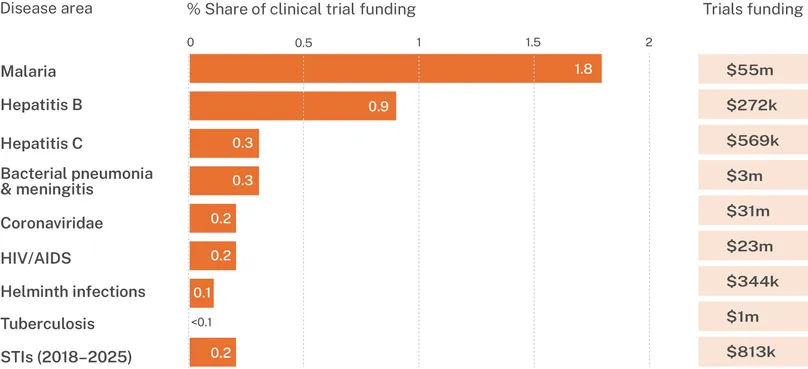
Beyond conditions specific to pregnancy, pregnant and lactating women also need evidence on the safety of medicines they may take for any condition. Yet they are routinely excluded from clinical trials, and more than 98% of drugs have insufficient pharmacokinetic or safety data to guide treatment in this population. Efforts to ethically include pregnant and lactating women are growing (see the WHO knowledge portal), for example, in trials of long-acting pre-exposure prophylaxis (PrEP). Yet G-FINDER data show how far there is to go. Among STIs other than HIV, only syphilis trials included pregnant and lactating women, and these account for less than a third (28%, US$813,000) of syphilis clinical trial funding since 3 2018. Across all clinical trial funding tracked by G-FINDER since 2007 (excluding maternal health conditions and contraception), just 0.3% of the US$38 billion went to trials that included pregnant and lactating women. Those trials covered only nine conditions, all of which affect this population, yet their involvement was negligible (Figure 1). Without this evidence, women and clinicians must make decisions about care in pregnancy without knowing what is safe.
Figure 1: Trials including pregnant or lactating women received under 2% of trial funding in every disease area 2007-2025 for all disease areas except STls (2018–2025)
Many of the pressures faced by pregnant and lactating women lie beyond the reach of R&D alone. The research gaps do not. Whether global R&D investment is building the tools to address these gaps is the question this brief examines.
Maternal health R&D investment: just 1% of global health R&D funding
This analysis uses G-FINDER data on R&D funding for products relevant to low- and middle-income countries (LMICs), tracked for PPH, preeclampsia, maternal iron deficiency anemia, and preterm labor1.
Maternal health R&D remains chronically underfunded compared with other neglected areas of global health. Between 2023 and 2025, total funding across the four maternal health conditions amounted to US$306 million: US$147 million for preeclampsia, US$124 million for preterm labor, US$24 million for postpartum hemorrhage, and US$11 million for maternal iron deficiency anemia.
Figure 2: R&D funding for maternal health and global health conditions (US$) 2023–2025
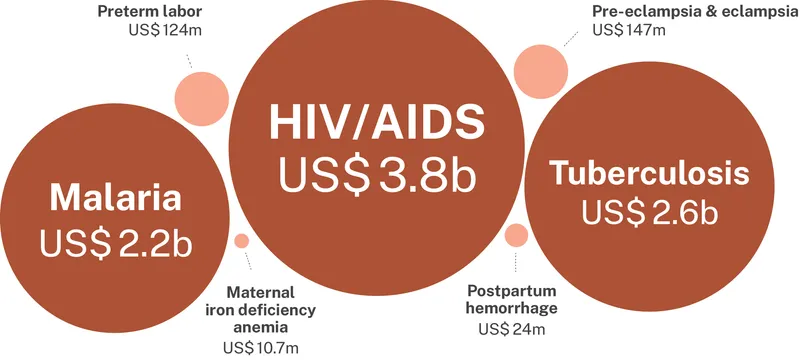
These figures total just 1% of global health R&D funding over this period and stand in stark contrast to conditions such as malaria and HIV, which received US$2.2 billion and US$3.8 billion, respectively. Recent increases should be viewed in context: increased investment only begins to address decades of underinvestment.
1 G-FINDER captures annual global health R&D investment reported by public, philanthropic, not-for-profit, and industry funders for LMICapplicable products. However, industry coverage can often be incomplete and depends on companies’ participation in the survey. As a result, the figures presented here should be interpreted as reported global health R&D investment captured by G-FINDER rather than a complete estimate of all maternal health R&D activity.
Preeclampsia and preterm birth: few treatments and diagnostics that do not reach the women most at risk
R&D for preeclampsia: promising but yet to deliver
Preeclampsia remains poorly understood, which limits targeted prevention and treatment. Care relies on controlling blood pressure, preventing seizures, and timing delivery. Prevention depends on identifying women at risk early enough to start aspirin. Until therapeutics can manage preeclampsia without early delivery, timely diagnosis remains the most important tool, and the pipeline reflects this.
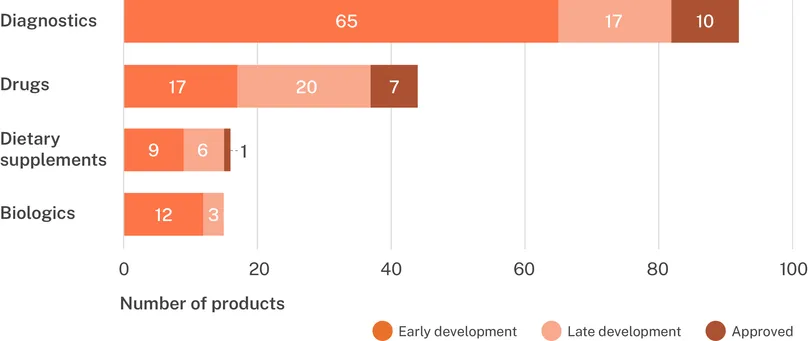
Of the 167 preeclampsia products and candidates in the G-FINDER scope and the Product Pipeline Portal, 92 are diagnostics. Only 10 are approved, mostly basic tools such as blood pressure measurement, urine protein tests, and the sFlt-1/PlGF ratio. Of the 82 in development, 79% (65) are at an early stage, many relying on ultrasound, MRI, laboratory assays, or machine learning. Biomarker research could also deepen understanding of the condition and enable earlier, pre-symptomatic diagnosis. However, three-quarters of preeclampsia diagnostics need a clinical laboratory, and only 22 of 92 are designed for use in primary health care settings. One of these is preXclude, a finger-prick test being validated in Kenya, Nigeria, and Rwanda. Even the right test only works if women are screened in time and then monitored, which many African health systems cannot yet provide.
Figure 3: Active pipeline for preeclampsia and eclampsia by product and development stage, 2025
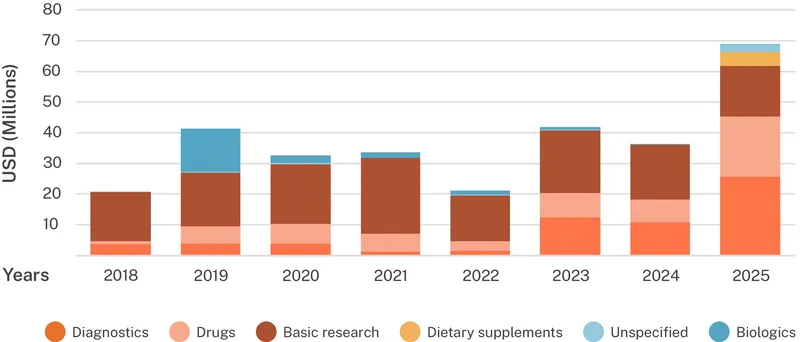
Funding is starting to respond to the need. Preeclampsia R&D investment reached a high of US$69 million in 2025, almost double the US$36 million of 2024. Most of this increase came from the Gates Foundation (GF), primarily for diagnostics. Diagnostic funding more than doubled in a year, from US$10.8 million to US$25.5 million; the Gates Foundation accounted for 86% of this increase and provided 63% of all diagnostic funding in 2025. Several of its new grants target earlier, simpler detection in low-resource settings, including point-of-care tests. If these reach the market, the lab-based share of diagnostics could start to fall. The foundation’s investment in drugs also grew almost fivefold, from US$2.7 million to US$13.2 million in 2025. Much of this funds new therapeutics designed to safely extend pregnancy, the continuation of a grant for an siRNA treatment adapted for low-resource settings, and the optimization of aspirin dosage.
Sustaining this momentum will need a broader base of R&D funders, so that point-of-care tools and effective therapeutics reach women where they actually receive care.
Figure 4: R&D funding for preeclampsia and eclampsia by product, 2018–2025
R&D for preterm labor: prediction without reach
Preterm birth is also poorly understood; it is increasingly seen as a syndrome with overlapping causes, from infection and inflammation to placental dysfunction, which makes it hard to predict and treat. Basic and early-stage R&D accounted for 84% of funding for preterm labor between 2023 and 2025. With few treatments available anywhere, African women face the same therapeutic gap as women in high-income countries, but in a very different context.
Diagnostics make up the largest share of the pipeline, with 44 candidates and 15 approved products, but most are not designed for the settings where women typically receive care. Of these, 88% are designed for use in a clinical laboratory; at least 15 rely on ultrasound of the cervix, typically by transvaginal scan, and only seven are designed for primary health care settings. Since many pregnancies happen without ultrasound or specialist staff, or even without a health facility, these tools will not reach the women at highest risk. AI-enabled point-of-care ultrasound (POCUS) and AI-assisted obstetric imaging offer an opportunity to help detect women at risk of preterm labor. Between 2023 and 2025, G-FINDER identified two grants exploring AI in this context: FINE Birth, funded by the European Commission and now in late-stage development, and an early-stage diagnostic funded by the US National Institutes of Health (NIH).
The funding base is narrow. The US NIH provided threequarters of the funding for preterm labor research between 2023 and 2025 and cut its investment by 16% from 2024 to 2025.
Women in Africa need the same early warning systems that women in high-income countries receive, and that requires more funders investing in diagnostics designed for where risk is greatest.
Figure 5: Active pipeline for preterm labor by product and development stage, 2025
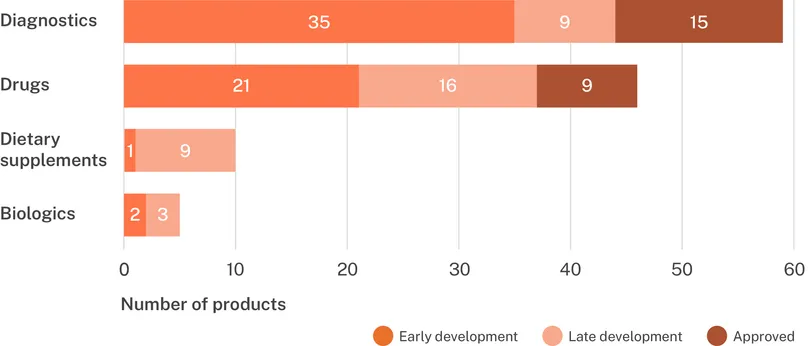
The development of better tools to detect and treat preterm labor is crucial for contexts where close pregnancy monitoring and neonatal intensive care cannot be provided consistently. New solutions are needed to prevent preterm births, reduce neonatal mortality, and minimize long-term adverse health outcomes.
Postpartum hemorrhage and maternal iron deficiency anemia: addressing the specific needs of low-resource settings
PPH and maternal iron deficiency anemia can be safely managed when experienced in high-income countries, thanks to close pregnancy monitoring and access to high-level facilities. Innovative, context-specific R&D is needed for women living in LMICs because existing solutions are not consistently applicable in low resource settings.
R&D for postpartum hemorrhage: proven models, fragile funding
Unlike preeclampsia and preterm birth, postpartum hemorrhage is a well-understood clinical emergency with established treatment pathways. These include WHO’s evidence-based E-MOTIVE bundle, which reduced a combined outcome of severe bleeding, laparotomy for bleeding, or maternal death from bleeding by 60% in a trial in Kenya, Nigeria, South Africa, and Tanzania. R&D needs, therefore, center on adapting tools for low-resource settings: medicines that do not require cold-chain storage or skilled administration, and simple, affordable devices. Where anemia leaves women little margin for blood loss, speed matters even more. Of 56 products, 27 are approved, and 29 are in development. Funding is 87% for drugs and 82% for late-stage or post-registration research, mostly for testing and reformulation of existing medicines. Even though devices remain a key gap, they received just 7% of PPH funding between 2023 and 2025.
Figure 6: Active pipeline for postpartum hemorrhage by product and development stage, 2025
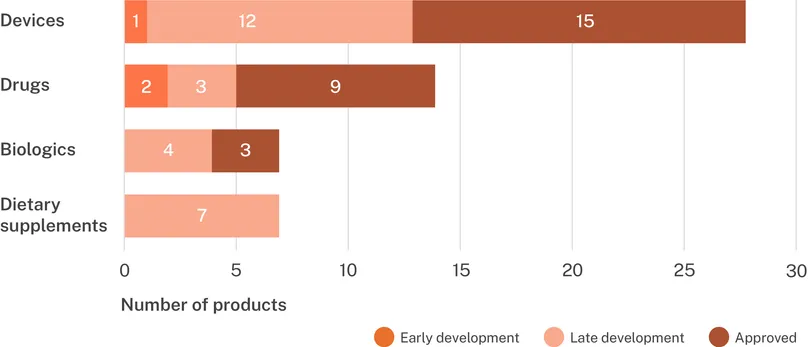
The past decade shows what targeted R&D and cross-sector partnership can achieve. A heat-stable formulation of carbetocin—an alternative to oxytocin— remains effective for at least three years at 30°C, whereas oxytocin needs refrigeration. Ferring developed it, the WHO tested it in the CHAMPION trial, MSD for Mothers funded the trial, and partners committed to making it available at an affordable price. PATH, Jhpiego, and FIGO then supported its early adoption and scale-up through the AMPLI-PPHI project. Separately, the UK Foreign, Commonwealth & Development Office is now funding PATH’s early-stage, proof-of-concept work on an inhaled formulation of tranexamic acid (TXA) for PPH. Devices show the same potential: the Ellavi uterine balloon tamponade, developed by PATH and South African manufacturer Sinapi Biomedical, and the Every Second Matters condom catheter kit were designed and approved for use in low-resource settings. None of these innovations relied on a new discovery, only on R&D tailored to the settings where women are most at risk.
This work continues. The largest PPH grant of 2023–2025 supports the REACH trial, which is testing whether heat-stable carbetocin can treat PPH as well as prevent it. This funding comes from Unitaid, which alone provides 45% of an already small PPH funding pool, leaving the field vulnerable if priorities change. Sustaining momentum will take more funders willing to invest in adaptation, not just invention.
R&D for maternal iron deficiency anemia: a need for renewed attention
Maternal iron deficiency anemia is also well understood, but because iron supplements exist, it is often treated as solved and attracts little investment. Oral iron-folic acid, still the main treatment, is often poorly absorbed and can cause side effects, while intravenous iron requires access to a facility and trained staff. The shift to multiple micronutrient supplements will require major changes in policy, financing, and procurement. In Africa, anemia has additional causes, such as malaria (3-15% of the maternal iron deficiency anemia burden in malaria-endemic areas) and hookworm, which infects between a quarter and a third of pregnant women in sub-Saharan Africa. Yet without point-of-care diagnostics to identify the root cause, most women receive standard iron supplements— whether or not they address the underlying condition.
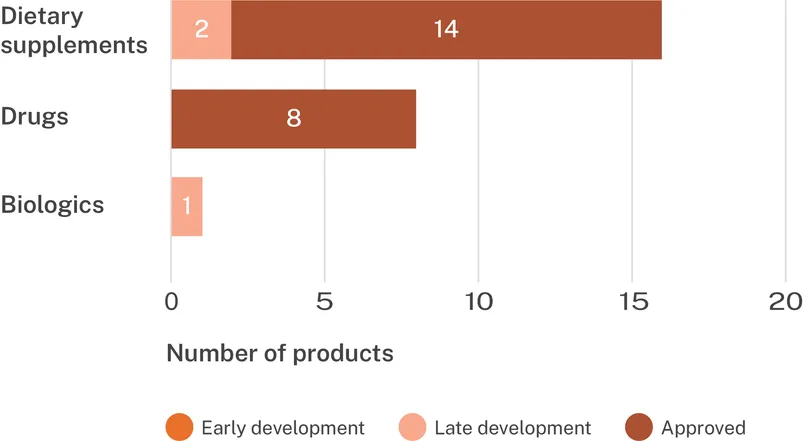
The pipeline does little to change this. All 22 approved products are forms of iron, and only three candidates are in development, all at late stage, so nothing new is coming behind them. Diagnostics received US$2.8 million between 2023 and 2025, a quarter of maternal iron deficiency anemia R&D funding, all focused on point-of-care diagnosis within the G-FINDER scope, including the NIH-funded mobile health machine-learning model being tested in Kenya. Closing the gap requires better-tolerated alternatives to iron and point-of-care diagnostics capable of distinguishing the causes of iron deficiency.
Figure 7: Active pipeline for maternal iron deficiency anemia by product and development stage, 2025
Who funds maternal health R&D: a fragile foundation for Accra Declaration commitments
The Accra Declaration and the AU Champion Roadmap on RMNCAH 2026–2030 frame maternal health as a test of health sovereignty, with an emphasis on integrated services, sustainable financing, and regional manufacturing and procurement. Neither sets out an R&D agenda: the Roadmap starts from the premise that Africa “has the evidence, policies and proven interventions” to prevent most maternal deaths. This brief shows where those tools are missing or inadequate, and that the funding behind them is fragile.
For the four conditions discussed in this brief, two funders based outside the continent provided three-quarters of all funding between 2023 and 2025: the US NIH (52%, US$160 million) and the GF (24%, US$72 million). The balance is already shifting. The NIH’s share fell from 68% (US$59 million) in 2023 to 39% (US$49 million) in 2025, while the GF’s share rose from 15% (US$13 million) to 33% (US$40 million), driven mainly by its increased investment in preeclampsia in 2025. A single funder’s change in priorities can reshape the field.
Industry contributed just 1% (US$3.5 million), reflecting limited commercial incentive to develop low-cost products for low-resource settings and a general aversion to R&D for use in pregnancy. Yet some of the biggest successes, such as heat-stable carbetocin, depended on industry partnerships, and the Accra Declaration explicitly calls for stronger private and philanthropic contributions, alongside expanded local manufacturing and pooled procurement. Only one African funder, the South African Medical Research Council, appears in G-FINDER data for these conditions, though limited reporting from the continent may mean African funding is under-captured. A broader funder base would reduce risk and bring different priorities, and African governments and institutions need a seat at the table to set priorities for the tools the continent requires.
Who builds the evidence: maternal health clinical trials in Africa
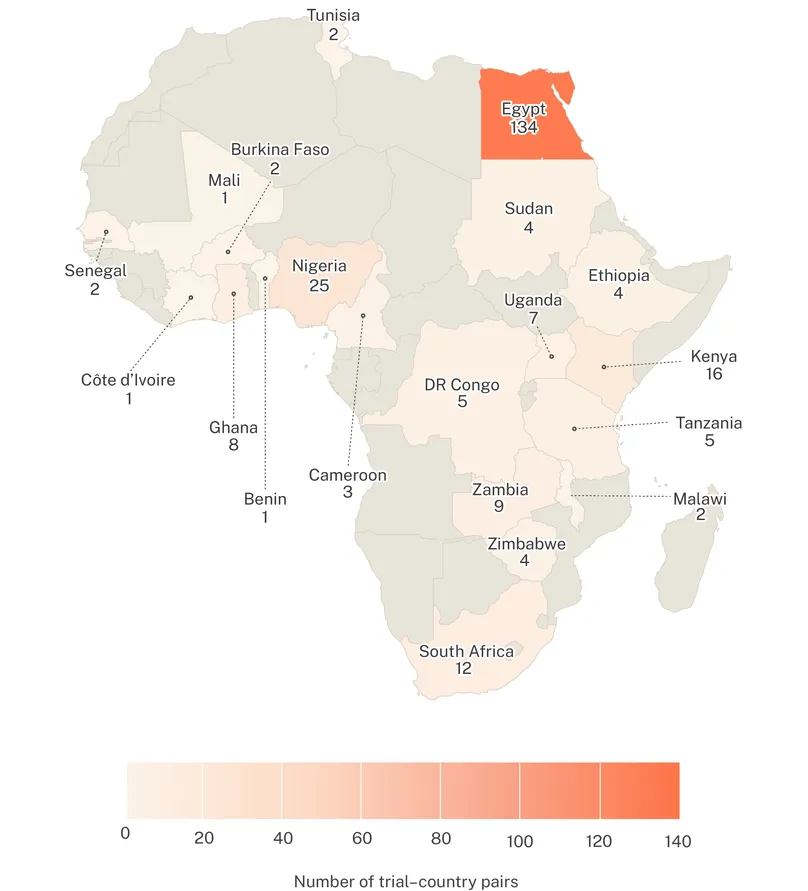
Funding is only one measure of who shapes maternal health R&D. Where clinical trials are conducted, who is included, and who leads them shape the evidence on which maternal health tools are built. Publicly available data identify 975 clinical trials conducted between 2001 and 2025 for the four conditions of focus2, of which 195 (20%) had at least one site in Africa. Egypt (134), Nigeria (25), Kenya (16), and South Africa (12) account for threequarters of African trial-country pairs and Egypt alone for more than half.3 Sub-Saharan Africa, where most of the world’s maternal deaths occur, accounted for only 107 trial-country pairs, less than 10% of the global total.
Figure 8: Number of maternal health clinical trials (in focus maternal health areas) with at least one site in each African country, 2001–2025
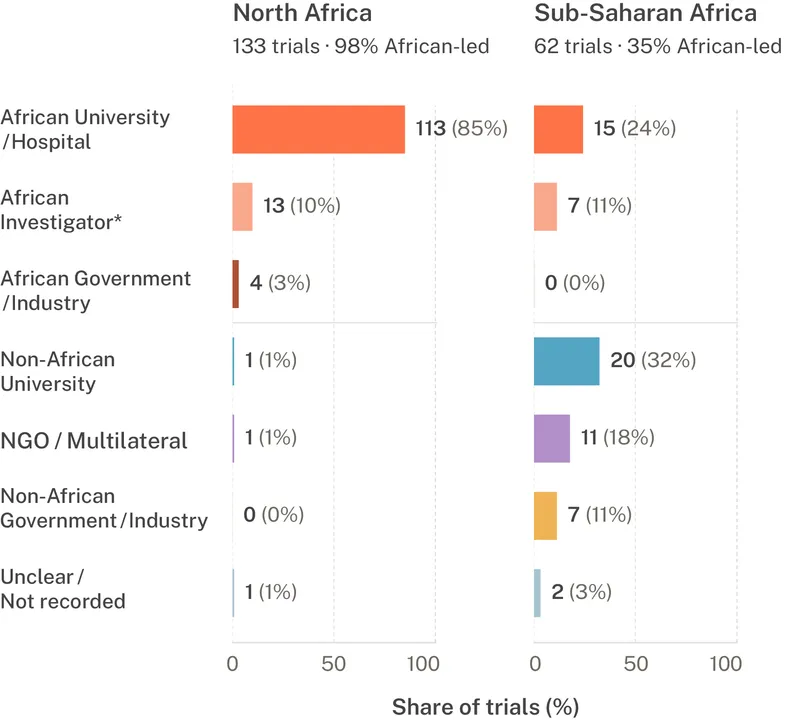
Leadership differs sharply by region. In North Africa, 96% of the 129 trials with Egypt as their sole African site were led by Egyptian institutions or investigators, and the other four North African trials were led by Tunisian and Sudanese investigators. In sub-Saharan Africa, African institutions led just 22 of the region’s 62 trials; the WHO, government research agencies, and universities in the US and UK led most of the rest. All but one of the trials led from sub-Saharan Africa ran in a single country, while 17 of the 18 multi-country trials were led from overseas. This mirrors our brief ‘From commitment to capability: Are current R&D trends delivering on Africa’s health sovereignty ambitions?’, which found that nearly three-quarters of trials for Africa CDC priority diseases were led from outside the continent.
R&D on postpartum hemorrhage shows what is possible and what remains missing. The successes described earlier were all tested where they would be used: the CHAMPION trial recruited women in five African countries, the Ellavi balloon tamponade was trialed in Kenya and Ghana, and the condom catheter kit was tested in Benin and Mali.
However, each of these trials was led by organizations outside the continent. Bringing R&D to African women is not the same as conducting African-led R&D.
The foundation for that shift already exists: Egypt and Nigeria show that African institutions can lead clinical trials. The next step is to leverage this capacity and expand it so that more African institutions lead the trials that build the maternal health evidence base, not just host them.
Figure 9: Share of maternal health clinical trials in North Africa and sub-Saharan Africa by trial lead, 2001–20254
This approach would essentially shift the measure of innovation from novelty alone toward suitability and usability in the settings with the greatest unmet need. The Ellavi uterine balloon tamponade, the Nifty Cup for newborn feeding, Uniject™ for injectable contraception, and vaccine vial monitors demonstrate how designing for real-world constraints can support adoption and scale. Applying these principles earlier in development would enable African researchers, manufacturers, and health care professionals to shape product specifications, rather than primarily serving as trial sites or end users. PATH is applying similar approaches to pipeline technologies, including next-generation contraceptives and vaccine delivery devices.
2 Clinical trials linked to products in IGH’s maternal health pipeline data for postpartum hemorrhage, preeclampsia and eclampsia, preterm labor and maternal iron deficiency anemia, drawn from public trial registries. The total of 975 covers trials starting 2001–2025 with a recorded location; it excludes 51 trials with no recorded location, and withdrawn, terminated and suspended trials. Trials registered on more than one registry are counted once.
3 Trial-country pairs count each combination of clinical trial and a country in which it is conducted, so multi-country trials are counted in every country where they ran. Egypt hosted 134 trials: 129 had no other African site, and the other five also ran in other African countries.
4 Each trial is counted once. Five trials have sites in both regions – these are counted under sub-Saharan Africa.
Closing the regulatory and manufacturing gap for maternal health products
Maternal health is perhaps the most challenging test for Africa’s health sovereignty agenda, with R&D being only part of the challenge. Products like heat-stable carbetocin and Ellavi balloon tamponade show that products designed for low-resource settings can be developed, tested, and, in the case of Ellavi uterine balloon tamponade (UBT), made in Africa. However, a product that has been proven to work is not the same as one that is widely available. Even where promising innovations have emerged, their potential to reduce maternal deaths has depended on whether they can be evaluated, manufactured at scale, supplied at an affordable price, and integrated into routine care. For example, despite being recommended by the WHO in 2018, the availability and adoption of heat-stable carbetocin across selected LMICs in Africa remained limited for several years, with access expanding in some countries only in 2025, seven years later. This highlights the persistent gap between global health recommendations and country-level implementation, underscoring the need for coordinated implementation research and market-shaping strategies to accelerate the introduction, availability, affordability, and equitable access to essential women’s health innovations.
The evidence-to-access pathway for products is often lengthy and incomplete. For pregnant African women, the distance between evidence and an actual product that is available can be just as consequential as the absence of the innovation itself. The pathway for a product must be connected from design to delivery, and all the stages in between.
The Ellavi UBT is an example of “made in Africa for Africa” innovation, designed and advanced as a collaboration among Sinapi Biomedical, PATH, and key partners such as the Ghana Health Service, Kenya Ministry of Health, and South African Medical Research Council, with inputs from local stakeholders. When first-line treatments for PPH do not work, and the woman continues to lose blood, a uterine balloon tamponade can be inserted into the uterus. The UBT is filled with water, exerting pressure until the bleeding stops. These devices rapidly and effectively stop the bleeding (in 5–15 minutes), reducing blood loss and the need for risky and costly surgical interventions and blood transfusions. In the 2017 WHO Guideline Revision, WHO’s Managing Complications in Pregnancy and Childbirth manual was updated to include the use of UBTs as important tools for the treatment of severe PPH.
Approved UBTs on the market were extremely expensive, with one review estimating costs to range from US$200-450. In low-resource settings, improvised self-assembled catheters, such as the condom catheter, were being used. Ellavi filled the gap between these and is a fully assembled, ready-to-deploy UBT specifically designed for the management of severe PPH in LMICs. PATH conducted implementation research related to the health system fit of the Ellavi UBT into the postpartum hemorrhage package of care in Ghana and Kenya and disseminated results to key in-country stakeholders to transform care at national level. Additional actions to overcome bottlenecks included supporting the addition of Ellavi to procurement channels like the Kenya Medical Supplies Authority and the Mission for Essential Drugs and Supplies in Kenya, as well as the National Procurement Authority and central and regional medical stores in Ghana, to increase availability and access. PATH also supported budget advocacy at subnational levels to build capacity on financing and procurement options, provided compelling cost-effectiveness data to support Ellavi’s inclusion in national health insurance schemes, and helped integrate it into pre-service and in-service training for health workers.
Ellavi costs about one-twentieth of the price of existing UBT devices. It carries a CE mark, is registered in more than 25 countries, and has sold more than 40,000 units. As a regulated UBT manufactured and sold in Africa, it gives LMICs an affordable way to add a quality-assured device to their PPH toolkits.
Regulation: an enabler of both innovation and access to maternal health
Regulatory systems are central to translating Africa’s maternal health priorities into accessible products. Medicines, diagnostics and medical devices must meet appropriate standards of quality, safety, and performance before they can be used. Yet avoidable duplication in regulatory processes, fragmented requirements and limited regulatory resources can make it more difficult for products to reach multiple African markets.
Increased regulatory collaboration within the continent offers an opportunity to address these barriers without compromising standards. African regulatory authorities and regional institutions can strengthen reliance mechanisms, joint assessments, coordinated inspections and information sharing, as appropriate to the product and regulatory pathway. Early engagement between developers and regulators can also help clarify evidence requirements and identify potential obstacles before substantial investments have been made. The Ellavi UBT’s introduction into the Kenyan market, for example, required continuous collaboration between the manufacturer Sinapi Biomedical, the national regulatory authority, and supporting partner PATH, to facilitate regulatory approval and market introduction. The regulator and manufacturer engaged in the early stages of product registration to align regulatory requirements, documentation, and evidence needs. This coordination helped anticipate and address potential regulatory bottlenecks. The African Medicines Agency (AMA), through its newly launched Regulatory Innovation and Manufacturing Readiness Hub, will serve as the primary entry point for innovators, manufacturers, and investors seeking to navigate Africa's regulatory landscape. For maternal health, AMA's success will ultimately be measured by its ability to facilitate regulatory reliance, joint assessments, and faster registration pathways for lifesaving maternal health products, enabling them to reach women more quickly and help reduce the continent's unacceptably high maternal mortality burden.
At the same time, AMA’s functions and decisions will not replace the mandates of national regulatory authorities. Decisions regarding product approval, adoption into national health programs, and inclusion in procurement lists will remain sovereign national responsibilities. So, rather than requiring innovators, manufacturers, and investors to engage on a country-by-country basis to assess regulatory requirements and market readiness, AMA will serve as a continental one-stop shop, providing coordinated regulatory and market intelligence and streamlining engagement with the African regulatory ecosystem.
For maternal health, these regulatory collaboration mechanisms matter even more because delays in access to useful innovations can prolong reliance on products that are poorly suited to local settings. Regulatory collaboration should therefore be considered part of the innovation pathway, rather than a final administrative step after research and development have concluded. This requires sustained investment not only in African developers but also in regulatory expertise, quality control infrastructure, and the capacity to evaluate increasingly diverse technologies, including diagnostics and medical devices.
Harmonization alone, however, will not guarantee access. It must be followed by appropriate national adoption, procurement, distribution, and use. A product that is approved but unaffordable, unavailable, or absent from clinical practice will have limited impact on maternal outcomes.
Manufacturing for maternal health in Africa
The Accra Declaration's commitments to regional manufacturing and pooled procurement create an opportunity to connect maternal health innovation with Africa's broader health sovereignty agenda. Caution should, however, be taken not to measure manufacturing capacity in Africa solely by the number of facilities established or products manufactured locally. The value of manufacturing ultimately depends on whether quality-assured products can be supplied reliably, affordably, and at the scale required.
Maternal health products present different manufacturing opportunities and constraints. Some may be suitable for local formulation, assembly, or production, but others may require more specialized technologies, substantial capital investment, or regional markets to achieve viable production volumes. A pragmatic approach would therefore combine domestic manufacturing, where feasible, with regional production partnerships, technology transfer, and continued collaboration with established global suppliers where necessary.
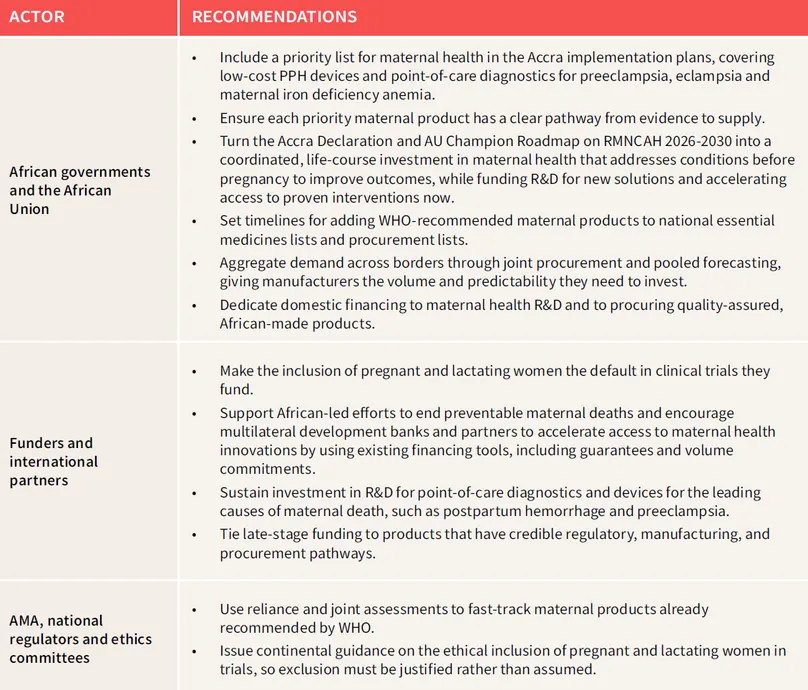
It is important to note that local production for maternal health cannot be sustained by increased investment in manufacturing alone. Manufacturers will need predictable demand, viable procurement arrangements, and confidence that their products can compete on quality, price, and reliability. Some critical maternal health products, such as oxytocin, heat-stable carbetocin, misoprostol, and magnesium sulfate, serve relatively under-resourced, public-sector, and fragmented markets in Africa, where margins are small. This makes them too commercially unattractive for manufacturers to prioritize, further contributing to the access challenge. Pooled procurement, demand aggregation across borders, and coordinated demand forecasting through the African Pooled Procurement Mechanism (APPM) or UNFPA could help create greater volumes and stronger incentives 11 for investment in maternal health production. Pooled procurement under the Accra Declaration should include a list of maternal health products so that manufacturers can see aggregated demand before investing. Bundling maternal products can also create a more viable case for manufacturers, rather than treating them as separate low-margin products. Public and external funders should offer funding to late-stage products that have a clear pathway from development to supply—products with a route to regulatory approval, a credible manufacturer, and a confirmed buyer.
Connecting R&D funding to manufacturing feasibility and anticipated demand could help prevent promising products from reaching late-stage development without a credible pathway to sustained supply.
Turning commitments into action
African maternal health will require more than increased R&D investment or expanded manufacturing capacity in isolation. It requires an integrated pathway in which African health needs and local settings inform product design, African institutions contribute to generating and evaluating evidence, regulatory authorities enable timely, rigorous assessment, and manufacturing and procurement arrangements support sustainable access.
The implementation of the Accra Reset should therefore be accompanied by greater attention to the connections between these stages. Governments, regional institutions, funders, researchers and manufacturers in Africa should assess the specific barriers preventing priority maternal health products from progressing from development to routine use. The Platform for Harmonized African Health Manufacturing (PHAHM) is well placed to assess manufacturing capacity and demand aggregation for these products and AMA’s regulatory innovation, and manufacturing readiness hub can assess regulatory readiness and early engagement. Progress should be evaluated not only through funding commitments and manufacturing investments, but also through the availability of quality-assured products at the basic primary health care setting, regulatory progress, affordability, procurement uptake and continuity of supply.
The ultimate ambition for manufacturing is not to produce every essential maternal health product within every African country. It is to ensure that African institutions and countries have a meaningful and leading role, where necessary, in determining which innovations are developed, how they are evaluated, where production can be sustained and how products reach the women who need them. Maternal health sovereignty becomes tangible when African priorities and pressing needs shape the innovation pathway, and promising solutions translate into reliable access for African women.
Implications for the Blindspots series
Maternal health sharpens the picture built across this series. Our first brief, ‘From commitment to capability: Are current R&D trends delivering on Africa’s health sovereignty ambitions?’, found that nearly three-quarters of clinical trials for Africa CDC priority diseases were led from outside the continent, and that manufacturing ambition is outpacing the R&D needed to sustain it. Maternal health shows the same pattern in a sharper form: African institutions led only 22 of the 62 maternal health trials in sub-Saharan Africa, and two funders based outside the continent provide three-quarters of R&D funding for the four conditions examined here.
Our second brief, ‘The diagnostics deficit: Funding, access, and preparedness gaps in African health systems’, showed that around half of approved diagnostics for priority diseases need a clinical laboratory, putting them out of reach at the primary health care level. The same barrier recurs here: three-quarters of preeclampsia diagnostics and 88% of preterm labor diagnostics are designed for laboratory use, while antenatal care, the main entry point for maternal health tools, is delivered largely through primary care.
Maternal health also adds something new. It is where the gap between innovation and delivery is most directly measured in lives, and where the exclusion of pregnant and lactating women from research means evidence gaps persist even when products exist.
Looking ahead, climate change is already intensifying these pressures, raising the risk of preterm birth and hypertensive disorders in pregnancy and making heatsensitive products harder to deliver. The final brief in our series will turn to climate, emerging threats, and preparedness, and will ask whether R&D is keeping pace with Africa’s changing risk profile.
Table of contents
- Key messages
- Introduction
- Maternal health R&D investment: just 1% of global health R&D funding
- Preeclampsia and preterm birth: few treatments and diagnostics that do not reach the women most at risk
- Postpartum hemorrhage and maternal iron deficiency anemia: addressing the specific needs of low-resource settings
- Closing the regulatory and manufacturing gap for maternal health products
- Turning commitments into action
- Implications for the Blindspots series